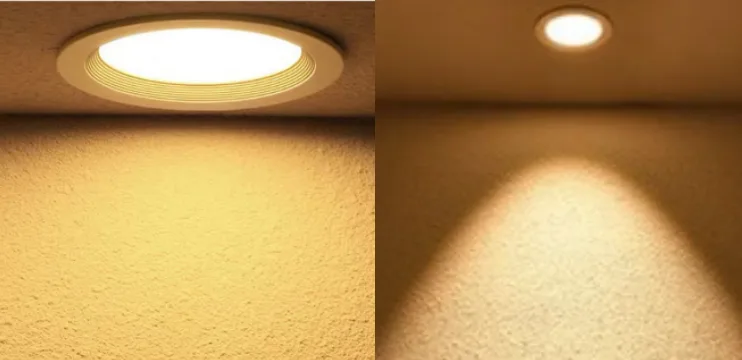
Usually, the standard LED lamp manuals or specifications will indicate IP Grade or IP Rating code. Many customers often ignore this parameter when buying lamps, or do not understand what this parameter means to the lamps, so there are a lot of troubles when using LED lamps. Now we are talking about how we should choose the right IP Rating when buying LED lamps.
What is the IP rating for LED lights?
IP is the abbreviation of Ingress Protection. The IP rating is the ability to protect against the ingress of foreign objects into the enclosure of electrical equipment. It is from the International Electrotechnical Commission’s standard IEC 60529. In this standard, the format of the IP rating is for the protection of electrical equipment enclosures against foreign objects. IPXX, where XX is two Arabic numerals, the first number represents the level of preventing solid objects from entering, the highest level is 6; The second number indicates the level of preventing water ingress, and the highest level is 8. The larger the number, the better the protection level. It is a very important standard for special or outdoor waterproof luminaires such as LED trip-proof lights, street lights, floodlights,.etc.
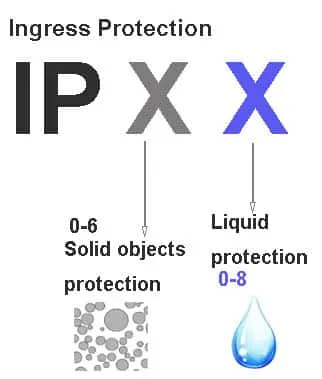
The following is the LED IP rating chart
The first number means dust-proof level (against solid objects)
| Number | Protection ability | Explains and definition |
| 0 | Prevent the human body (such as the palm) from accidentally contacting the internal parts of the LED lighting fitting, and prevent the intrusion of solid objects of larger size (diameter greater than 50mm) | No protection |
| 1 | Prevent the intrusion of solid objects> 50mm in diameter | Prevent tools, wires, and similar small solid objects with a diameter or thickness greater than 2.5mm from intruding and contacting the internal parts of led lighting |
| 2 | Prevent people’s fingers from touching the internal parts of the appliance or LED lights, and prevent outside solid objects of medium size (diameter > 12.5mm) from intruding | Avoid the entry of solid objects that are>12.5mm in diameter |
| 3 | Prevent entry of solid objects > 2.5mm in diameter | Prevent tools, wires, and similar small solid objects with a diameter or thickness greater than 1.0mm from intruding and contacting the internal parts of the lighting fixtures. |
| 4 | Prevent the intrusion of solid objects with a diameter >1.0mm | Completely prevents the intrusion of solid objects, although it cannot completely prevent the intrusion of dust, the amount of dust intrusion will not affect the normal operation of the led lamps |
| 5 | Prevent solid objects and dust | Completely prevents the intrusion of solid objects, although it cannot completely prevent the intrusion of dust, the amount of dust intrusion will not affect the normal operation of the LED lamps |
| 6 | Prevent solid objects and dust | Completely prevent the intrusion of foreign objects and dust 100% |
The second number means waterproof level(against liquid or moisture)
| Number | Protection ability | Explains or definition |
| 0 | No protection | No protection against water or humidity |
| 1 | Prevent water droplets from immersing | Water droplets falling vertically (such as condensation) will not damage the LED lamps |
| 2 | When tilted 15 degrees, it can still prevent water droplets from entering | Prevent the sprayed water from immersing |
| 3 | It can prevent water from intruding into the lamp body for a long time in water with a depth of more than 1 meter | Rainproof or prevent the water sprayed in the direction with an angle of less than 60 degrees from the vertical from entering the interior of the lamp and causing damage |
| 4 | Prevent splashing water from immersing | Water splashing from all directions cannot enter the lamp body and cause damage to the lamp |
| 5 | Prevent water spray from entering | In the case of low-pressure water spray for at least 3 minutes, water cannot enter the LED lamp |
| 6 | Prevent big waves from immersing | In the case of a large amount of water spraying for at least 3 minutes, there is still no water entering the lamp body |
| 7 | Prevent water intrusion during flooding | The lamp can last for 30 minutes at a depth of 1 meter to prevent water from entering the lamp body |
| 8 | Prevent water intrusion when sinking | It can prevent water from intruding into the lamp body for a long time in the water with a depth of more than 1 meter |
It can be seen from the above two IP Rating tables that different combinations of numbers have different dustproof and waterproof effects. Usually, in the LED lighting industry, common IP Rating codes are: IP22, IP44, IP54, IP65, IP66, IP67, IP68. From these common IP Ratings, we can divide them into two different categories. (IP22, IP44, IP54) are mainly used indoors, the other IP65, IP66, IP67, and IP68 are basically outdoor lighting.
How to select the IP rating for LED lights?
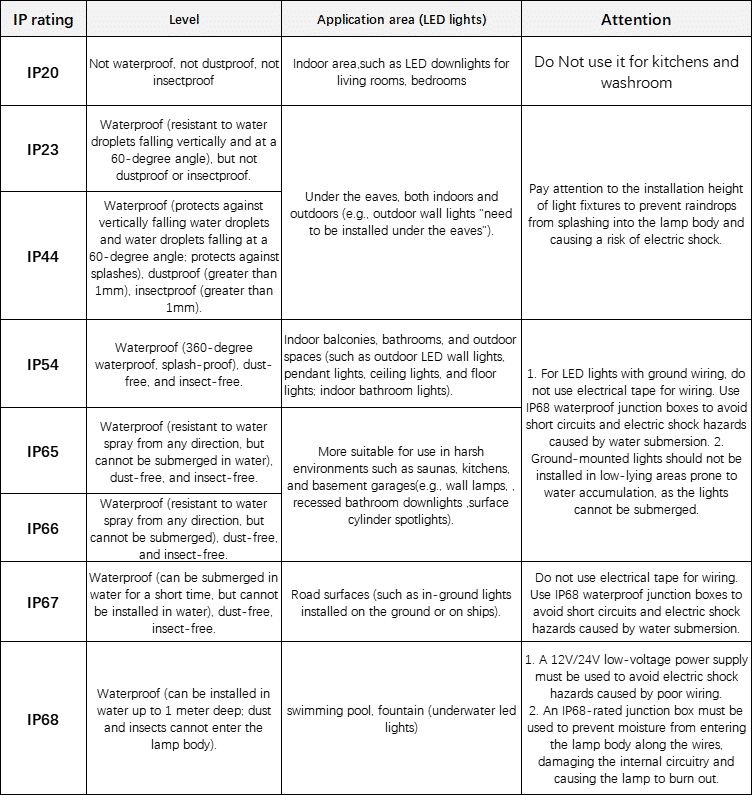
IP22 LED lighting and application
It means it can prevent 12.5mm solids from entering the inside of the lamp, and at the same time prevent the lamp from being invaded by the liquid when it is tilted 15 degrees. Lamps with this protection level can only be used indoors, and the indoor environment must be relatively dust-free. It is mostly used in the living room, bedroom, living room, offices, schools, supermarkets, etc. This kind of protection level LED lights have LED downlights, LED panel lights, LED tube lights, LED track lighting, etc.
IP54 LED lighting and application
This IP Rating means that the adverse effects of dust lamps can be ignored, and it is necessary to focus on its waterproof ability (Water splashing from all directions cannot enter the lamp body and cause damage to the lamp), in this case, its waterproof effect has been achieved A certain level, can be the competent indoor humid environment, such as kitchen, bathroom, toilets, outdoor balcony. This IP Rating’ lighting is usually designed based on the IP22 led lighting, such as IP54 Moisture-proof led downlights, IP54 flush mount ceiling lights, IP54 dust-proof batten, etc.

IP65 waterproof LED lights and applications
From IP65 on, LED lamps are now reaching the waterproof level, which can be used outdoors, but also indoors such as recessed bathroom downlight. For some more complex application environments, such as mines, chemical plants, and explosion-proof lamps required in these places, their IP Rating is at least IP65. It can completely prevent external dust from entering the inside of the lamp, and at the same time reach the ordinary waterproof level. Common IP65 Waterproof LED lights to include outdoor landscape lights, outdoor flood lights, street lighting, high bay lights, LED Batten, etc.
IP66 LED lighting and application
It is similar to IP65, but it has with higher waterproof ability. Generally, the lighting is the same as IP65 type, such as inground uplight, outdoor spotlights, etc. They are stronger in waterproof function, but they are still not working underwater.
IP67 LED lighting and application
IP67 waterproof LED lights can work underwater. Do not install these lamps in places where the water is too deep. Those lamps installed on the ground but very close to the water are generally IP67, such as fountains on the ground, pool sides, etc. Of course, some outdoor lamps that are only used for non-underwater applications can also be upgraded to the IP67 protection level under customer demand. In this case, the life of the lamps will generally be longer. The manufacturer’s IP67 lights have underground lights, deck lighting, etc.
IP68 LED lighting and application
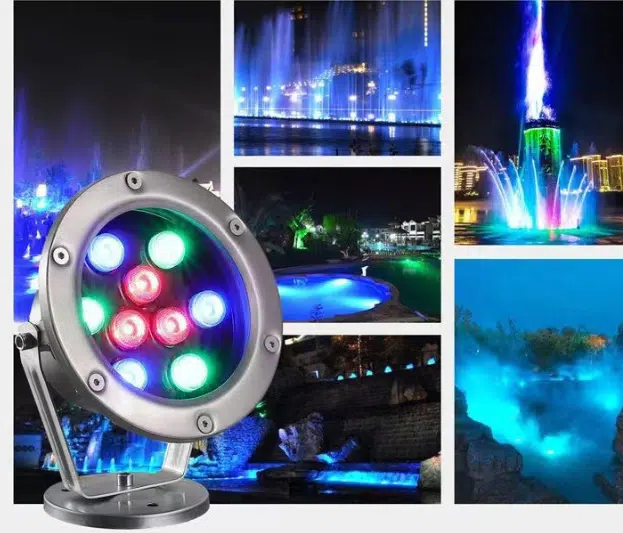
IP68 is a higher level in this protection system, which can basically adapt to any environment in daily life. Generally, this kind of lamp, such as swimming pool lights or fountain lights, requires very high craftsmanship and is expensive. It is often installed underwater, so the shell of such lamps is often 304 stainless steel to prevent rust and corrosion to the greatest extent. At the same time, due to the installation underwater, most of the input voltage of the lamps is AC/DC12V 24V input, which will be safer.
Conculsion
Before choosing the appropriate IP-rated lamps, you need to understand the specific environment in which these lamps are installed. According to different environments, choose the appropriate IP rating lamps. For example, for indoor environments, IP54 can basically meet all requirements. Of course, if it is not a humid environment, IP22 lamps are the most suitable, and their price is generally much lower than IP54 LED lights. If it is used outdoors, you need to consider whether it needs to be installed underwater; if not, IP65-IP66 is fine. If it is underwater, it is recommended to use IP68.
You can contact us if you have any other questions, ideas, or inquiries, then we can give you detailed solutions.

Hello, customers
My name is Ricky Wang, I’m the business manager of GRNLED. I have been in LED lights industry for more than 10 year. Feel free to contact us. I’m happy to provide you the best service and products.
Email: info@grnled.com | WeChat: ledfixture