Hospital corridors are an essential part of the healthcare environment, serving multiple functions such as patient movement, medical staff operations, and emergency response. Therefore, corridor lighting must not only meet basic visual requirements but also comply with medical safety standards, accessibility considerations, and energy efficiency requirements.

Core Design Principles for Hospital Corridor Lighting
- Adequate and uniform illuminance, with no dark areas or shadows, lighting space 2.0-2.5M
- Strict glare control, UGR ≤ 19, ensuring visual comfort and safety
- High color rendering, Ra ≥ 80, suitable for medical observation
- Flicker-free and low blue light, suitable for patient comfort
- Reliable emergency lighting, meeting fire safety and evacuation requirements
- Supports zoned dimming for both day and night scenarios
- Electrical safety with flame-retardant design, proper grounding and protection
- Easy-to-clean, antibacterial fixtures compliant with hospital hygiene standards
Key Design Standards and Codes
Reference Standards:
- GB 50034-2013 (China)
- JGJ 16-2008 (China)
- CIBSE SLL Code for Lighting (UK)
- IES Lighting Handbook (North America)
- EN 12464-1:2021 (EU)
Illuminance Requirements (Unit: Lux, lx)
| Area | Minimum Lumen | Recommended lux | Notes |
| General corridors (wards, office areas) | 100lx | 150-200lx | Ensures basic circulation and visual comfort |
| Main corridors (ER, ICU, operating areas) | 150lx | 200-300lx | Allows clear visibility of patients, equipment, and signage |
| Staircases & emergency exits | 75lx | 100-150lx | Ensures safe evacuation |
| Night lighting (duty mode) | 10-30lx | 50lx | Supports night patrols while minimizing disturbance to patients |
Color Temperature (CCT) & Color Rendering Index (CRI)
CCT:
- General corridors: 3500K–4500K (neutral white), balancing comfort and clarity
- ER & ICU areas: 4000K–5000K, providing a bright and clear medical environment
- Night mode: 2700K–3000K, reducing visual stimulation and patient discomfort
CRI: ≥ 80, ensuring accurate identification of skin tones, wounds, and blood details
Uniformity (U0 = Minimum / Average Illuminance)
U0 ≥ 0.5, to avoid excessive contrast, visual fatigue, and shadowed areas. Wall illuminance ≥ 50 lx, ensuring visibility of signage
Glare Control
UGR ≤ 19, minimizing glare and improving visual comfort. Use anti-glare fixtures (e.g., grille lights, low-UGR downlights, diffused panel lights)
Emergency Lighting Requirements
- Corridor emergency lighting ≥ 1 lx
- Key areas (stairs, corners) ≥ 5 lx
- Backup power ≥ 2 hours (e.g., emergency batteries or UPS systems)
Electrical & Installation Safety
- Installation height: ≥ 2.5 m (optimal: 2.6–2.9 m above floor)
- Ground resistance: ≤ 4Ω; insulation resistance: ≥ 1 MΩ
- Flame rating: housing V0, flame-retardant wiring required
- Group control: 3–5 fixtures per group, supports dimming/night mode
- Dual power supply + emergency battery, integrated with fire control system
Reliable LED Lighting for Hospital Corridor
(1) Typical Lighting Fixtures
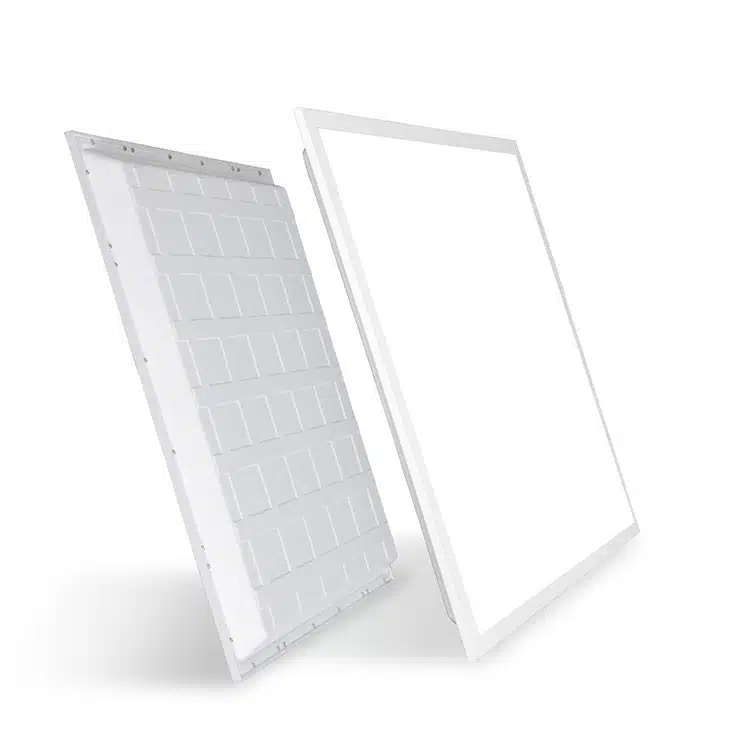
- Recessed LED panel lights (3000K–4500K), providing soft and uniform illumination, suitable for general corridors
- Linear lights, ideal for main corridors to deliver continuous and even lighting
- Low-glare downlights/grille lights, used for supplementary lighting while minimizing glare
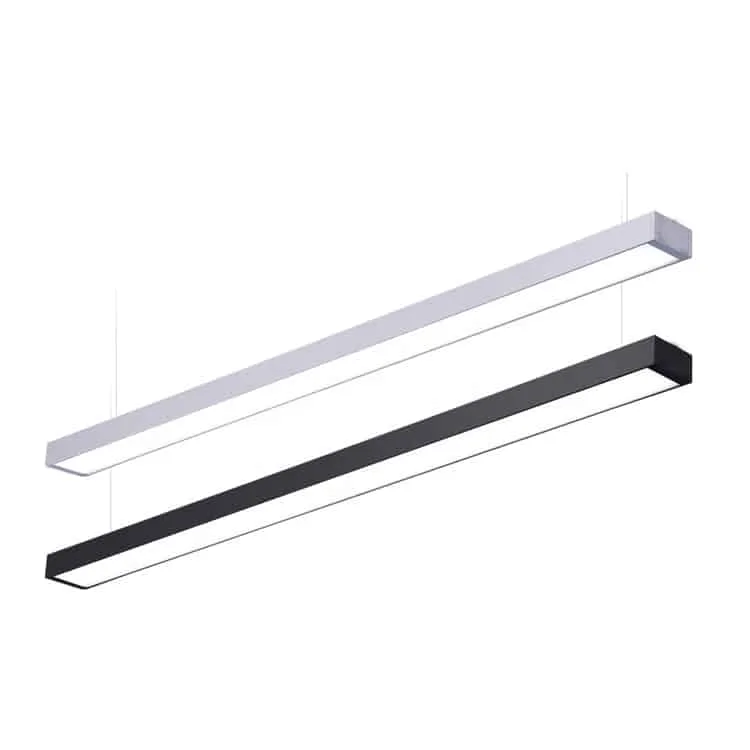
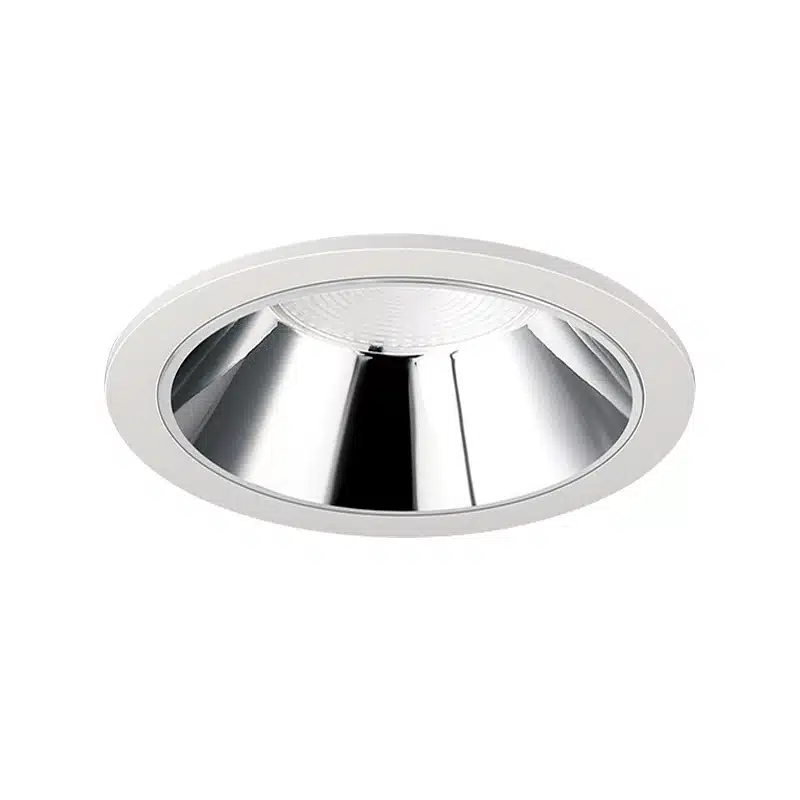
(2) Auxiliary Lighting Fixtures
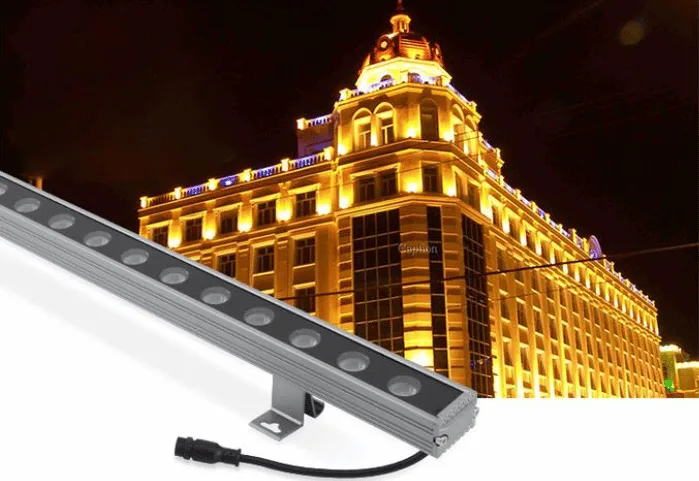
- Wall washer lights, enhancing the visibility of signage and reducing visual fatigue
- Step lights / low-level guide lights, suitable for night mode to minimize disturbance to patients
- LED illuminated signage, ensuring clear visibility of evacuation signs
Smart Control & Energy Efficiency
(1) Smart Lighting Systems
- Sensor-based lighting: Install motion and daylight sensors to reduce energy consumption, especially at night
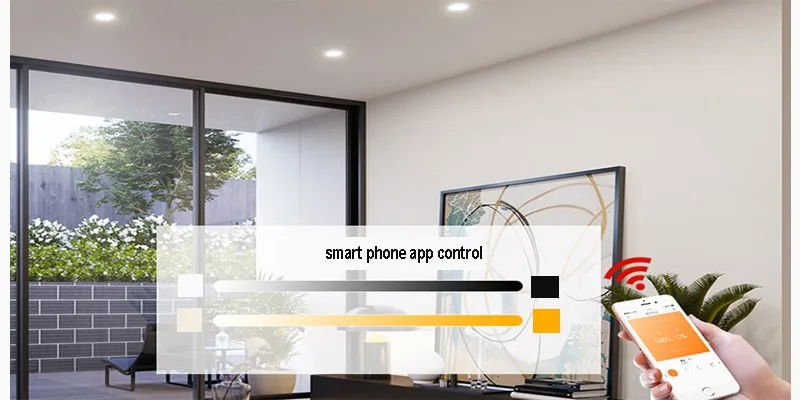
- Scheduled dimming: Maintain 150–200 lx during the day and automatically reduce to 30–50 lx in night mode
- DALI or 0–10V dimming: Enables intelligent control, adjusting brightness based on occupancy and time
(2) Energy-Saving Measures
- LED light sources: Energy-efficient with low maintenance and a lifespan of ≥ 50,000 hours
- High-efficiency optics: Use fixtures with ≥ 100 lm/W to reduce energy consumption
- Low blue light design: Minimizes disruption to patients’ and staff’s circadian rhythms
Hospital corridor lighting should prioritize safety, comfort, and energy efficiency, ensuring efficient medical operations and safe patient movement while avoiding excessive glare and visual fatigue.
By selecting appropriate CCT and illuminance levels, combined with smart control systems, the overall quality of the healthcare environment can be improved and operational efficiency enhanced.

Hello, customers
My name is Ricky Wang, I’m the business manager of GRNLED. I have been in LED lights industry for more than 10 year. Feel free to contact us. I’m happy to provide you the best service and products.
Email: info@grnled.com | WeChat: ledfixture